How 2026 energy bills are shaping up
For many households, 2026 does not feel like a full return to normal on energy costs. Prices may not be at the sharp peaks seen during the worst of the recent energy crisis, but bills are still high enough to put pressure on monthly budgets. Standing charges, wholesale market volatility and the simple fact that electricity remains expensive mean many homeowners are still looking for ways to reduce reliance on the grid.
In Scotland, that concern can feel even more immediate because homes often use more energy across the year. Longer heating seasons, colder winters and a greater need for lighting in darker months can all push usage up. That is one reason more people are comparing short-term bill management with longer-term options such as improving efficiency, adding battery storage, or installing solar through a trusted provider via our solar services page.
Why geopolitical issues still affect energy prices
Energy prices in the UK are not shaped by domestic demand alone. Global supply chains, international gas markets, shipping disruption and wider geopolitical tensions can all feed through into what households pay. Even when the UK generates more of its own electricity, the wider market still influences pricing, especially where gas continues to set the cost of power at key times.
That means price spikes can happen even when your own energy use has not changed. Households often feel they have very little control over these external pressures, which is why generating more of your own electricity can be attractive. Solar will not remove every bill, but it can reduce how much electricity you need to buy from the grid, which can make your costs less exposed to market swings.
When might energy prices come back down?
The honest answer is that nobody can promise exactly when prices will settle at a level homeowners would call affordable. Markets can ease, but they can also react quickly to supply issues, weather patterns and international events. In practice, many households are now planning on the basis that energy may remain relatively expensive and unpredictable for some time.
That does not mean panic decisions are the right approach. It does mean it is sensible to look at measures that improve control and reduce waste. A good first step is to understand how your home uses energy today. If you want tailored advice before making any changes, you can book a home energy health-check or contact GreenFox Energy to talk through your options.
Is solar worthwhile in Scotland?
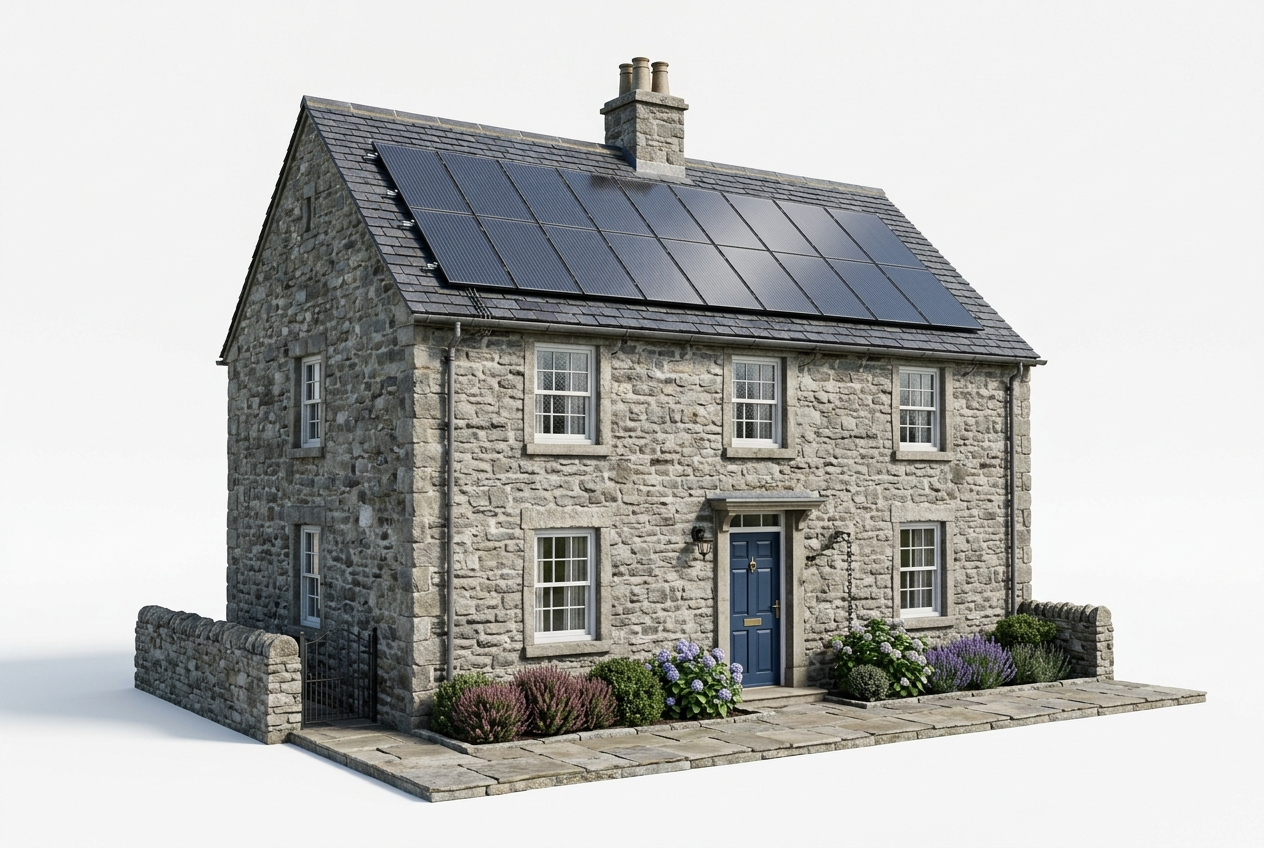
Yes, for many homes, solar can still be worthwhile in Scotland. A common misconception is that solar only makes sense in the south of England or in consistently sunny climates. In reality, solar panels work using daylight rather than heat, and modern systems can perform well in Scottish conditions when the roof, orientation and shading are suitable.
The key point is not whether Scotland is sunny every day. It is whether your home can generate a useful amount of electricity across the year and whether that generation matches your usage pattern. A professional assessment will look at roof pitch, direction, local shading and expected output before recommending a system. If you are exploring the numbers, you can get a solar quote based on your property rather than relying on generic estimates.
Payback, savings and the winter reality
Solar savings in Scotland are usually strongest when your home uses electricity during the day, because that lets you consume more of what your panels generate. Typical savings depend on system size, household demand, tariff structure and whether you add storage. For some homes, a battery can help shift more of your solar power into the evening, which may improve overall value. You can learn more on our battery storage page.
Payback is never one-size-fits-all, but many homeowners now view solar as a long-term hedge against high electricity prices as well as a way to cut ongoing bills. Winter is the part people worry about most, and it is true that output is lower in the darker months. Even so, that does not make solar ineffective. The stronger spring and summer generation helps balance the year overall, and a well-designed system can still make a meaningful contribution to annual electricity use. The important thing is to go in with realistic expectations rather than assuming summer performance will be the same in December.
Next steps for Scottish homeowners
If your bills feel too high and too unpredictable, it may be time to look at what you can control. Start with your roof suitability, your daytime electricity use and whether you want to consider battery storage alongside solar. From there, the best route is a proper assessment rather than guesswork.
We help homeowners across Scotland make sense of solar in practical terms, with clear advice on likely performance, installation suitability and next steps. If you are ready to explore your options, you can get a solar quote, book a home energy health-check, visit our solar services page, or contact us for straightforward advice.