System Size Means Kilowatts
System size is the power of the whole array, written in kilowatts. It is the figure you can hold next to another design and compare. How that size is built from individual panels is a separate question, and it has its own article. This page stays with the array as a whole, and with what it should be rated at for your house. In Scotland the answer starts with your electricity use and with the hours someone is actually home. It then meets the limit of the roof.
It is tempting to shop for a size the way people shop for a boiler, hoping one kilowatt figure suits every three-bedroom house. Households do not line up that neatly. Two families with the same number of rooms can draw very different amounts of power, and they can draw it at different times of day. We size the system to the pattern we can see, and we keep it inside a range we install as a matter of course. Filling every spare slope is a separate decision, and it needs a reason rooted in how you use power.
Start With Your Annual Use
The first figure we ask for is the annual electricity total on your statement. That page already holds a full year, dark months and bright ones, holidays and ordinary weeks. How much electricity a home uses explains why a published average is only a benchmark, and why your statement is the page we want. If you have the annual figure, you have a starting point for system size. A single monthly bill can still help, and we read it carefully, because a January total and a July total are telling different parts of the story.
Annual use does not convert into kilowatts by a fixed shortcut. Higher use can justify a look at the larger end of our range, especially where a good share of that use can happen in daylight. Lower use can be well served by a smaller array that covers the daytime slice of the house. The design is there to show that relationship on your numbers. Usage comes first. A layout that ignores the statement is a layout aimed at a household we have not yet understood.
Daytime Use Matters More Than The Postcode
Daylight is what the panels use, so the hour of the day matters as much as the annual total. Someone home through the afternoon, with washing, a dishwasher, a computer, and the kettle running across those hours, can use solar as it is made. A house that is empty from morning until early evening generates into quiet rooms. The postcode tells us we are designing for Scottish daylight, with long summer days and short winter ones. Who is in the building during those hours is a separate fact, and it changes the size we recommend.
Two houses on the same street, with the same orientation, can therefore deserve different system sizes. One household's daytime routine can absorb a larger array. Another household's heavy use arrives after the panels have faded, and a bigger system mainly increases what is exported, unless a battery stores the surplus for later. We ask who is home, which jobs can move into the day, and whether the evening is the busy part of the house. Those questions do more for the kilowatt figure than the name of the town.
Our Usual Range From 2.7 To 7.3 kW
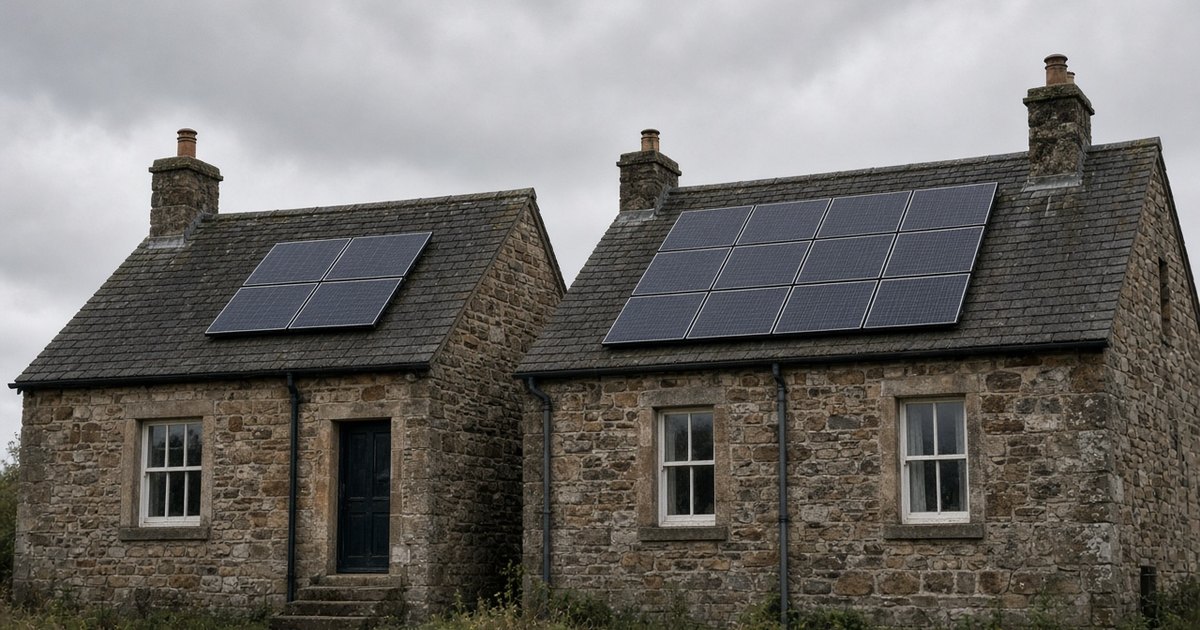
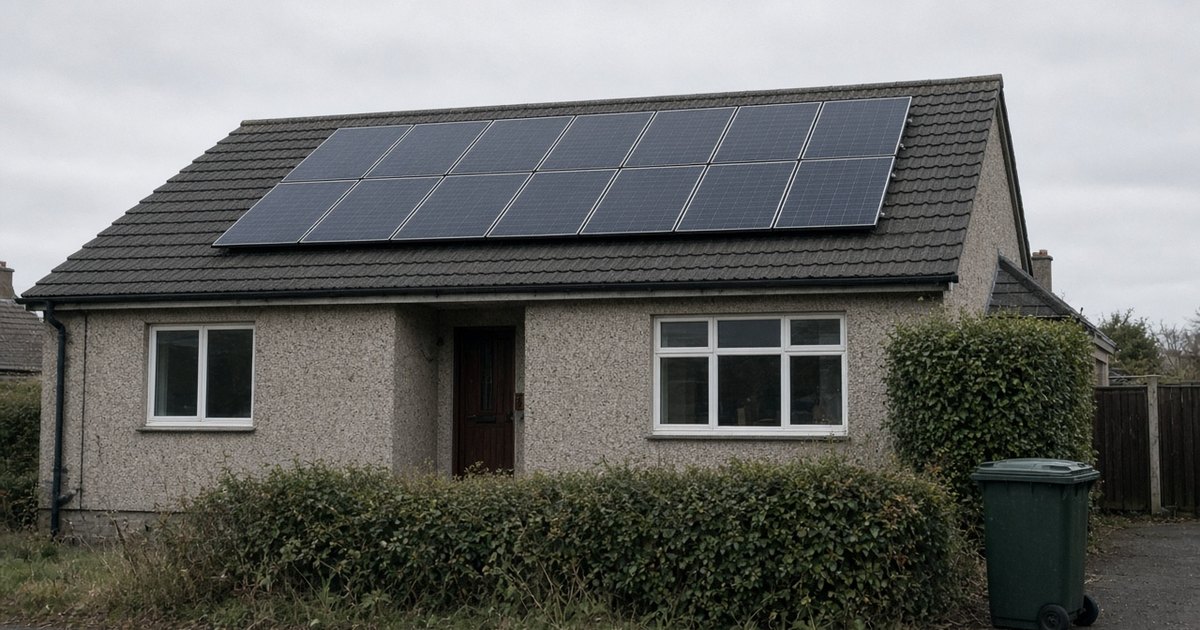
Our usual domestic range runs from about 2.7 kW at the small end, through about 4.6 kW in the middle, to about 7.3 kW at the large end. The designs are built with 455-watt panels. The count of panels behind those three sizes is set out in how many solar panels you need, which is the right place to turn a kilowatt figure back into rows on the roof. The installed size is the array designed for that roof, once the slopes have been measured and the shade has been taken into account.
About 2.7 kW suits more modest use, or a roof that only has room for a short run. About 4.6 kW is a common place to land when use is middling and the roof is willing. About 7.3 kW is for higher use, a clearer and larger roof, and a plan for the surplus. Bigger than your use, without a battery, mostly exports. Export is a real outcome, and for many households it is a weaker match than a size they can use in the house or keep for the evening. Whether a bigger solar system is worth it is worth reading before the top of the range becomes the aim by default.
When The Roof Limits The Size
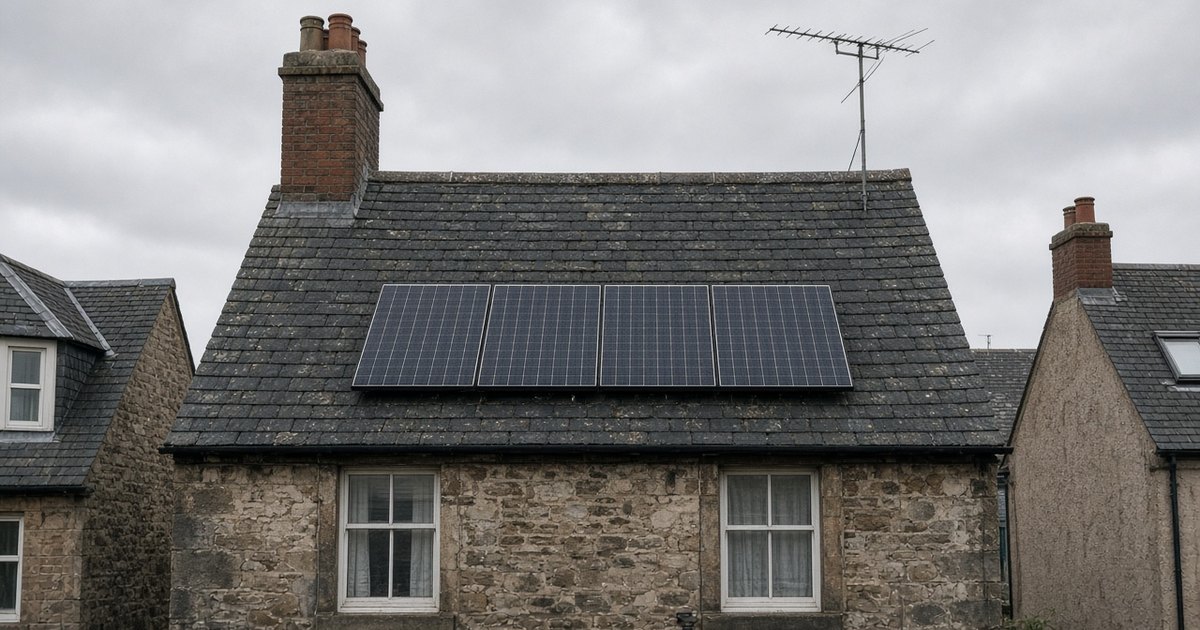
Usage can point towards about 7.3 kW while the roof refuses to host it. Chimneys, dormers, short slopes, and shade all cap the kilowatts. We keep panels out of a daily shadow, and out of a cramped valley, even when that leaves the system smaller than the bill alone might have suggested. If the usable slopes add up to a modest array, that modest array is the design. A heavily shaded rear, or a face of the roof that needs other work before anyone should be fixing rails to it, can produce the same careful result.
Sometimes the roof would allow the larger size and the usage would not. We treat that with the same care. Spare capacity you cannot use through the day, and do not plan to store, is a larger system than the house is asking for. Splitting an array across two slopes is normal where one face is too small on its own. An east-facing slope and a west-facing slope together often suit a household that uses power in the morning and again in the late afternoon. The limit is still the measured space. The survey is the measurement we design from.
A Design Beats A Rule Of Thumb
Shortcuts travel easily in conversation and poorly onto real roofs. A rule based only on the number of bedrooms misses shade, misses weekdays when the house is empty, and misses the shape of your annual statement. A design does the slower job. It reads the usage, checks who is home in daylight, measures the roof, and then names a size inside the range above. You end up with a figure you can question, with the reasons written beside it.
The way to begin is a survey, offered free of obligation for homes across Scotland, and for business premises too. Tell us the annual figure if you have it, and tell us whether the building is busy in the day or quiet until evening. We will come back with a system size based on that record, and with the panel layout that produces it. When you want the process to start, request a quote and we will take the size from your usage. The kilowatt number should be the conclusion of that work, agreed once the roof and the statement have both been seen.
Common Questions
What size solar system do I need for a family home?
Match the kilowatt size to your annual electricity use and to how much of that use happens in daylight. Our usual designs run from about 2.7 kW to about 7.3 kW.
Is a medium solar system enough for most houses?
About 4.6 kW sits in the middle of our usual range, and it suits many homes with middling use and a willing roof. Your statement and a survey show whether you land there.
What if the solar system is bigger than my daytime use?
Extra capacity you do not use in the day, and do not store, mostly exports. We aim for a size the house can use, or a size you have a plan to store.