What Actually Changes Between Panels
Brochures lay panels out like a shelf of competing badges. On a real roof, fewer things change the result than the opening page suggests. Wattage changes how much rated power sits in each rectangle. Shade, in the plain sense that matters on a house, is about where a shadowed patch should be left empty so the rows around it stay in clear daylight. The roof either holds the layout or it does not. Those three points do more for your result than a logo on the frame.
We design with one wattage, so this is a layout decision rather than a long menu of brands to rank at the kitchen table. The choices that remain are practical. Which slopes, which gaps, how many panels, and whether a tree or a chimney changes the rows. A farmhouse, a tenement, and a suburban semi in Scotland each get a layout of their own, even when the panel is the same class of product. Start with the building. The panel follows the building.
Why We Design With 455-Watt Panels
We size systems with 455-watt panels. The counts we quote run from 6 to 16, which lands at about 2.7 kW at the small end, about 4.6 kW in the middle, and about 7.3 kW at the large end. One wattage keeps the design easy to follow. The system grows when a panel is added where the roof has a place for it, and it stays smaller when a gap is the better choice. You can see the steps. The survey checks those steps against the actual slopes.
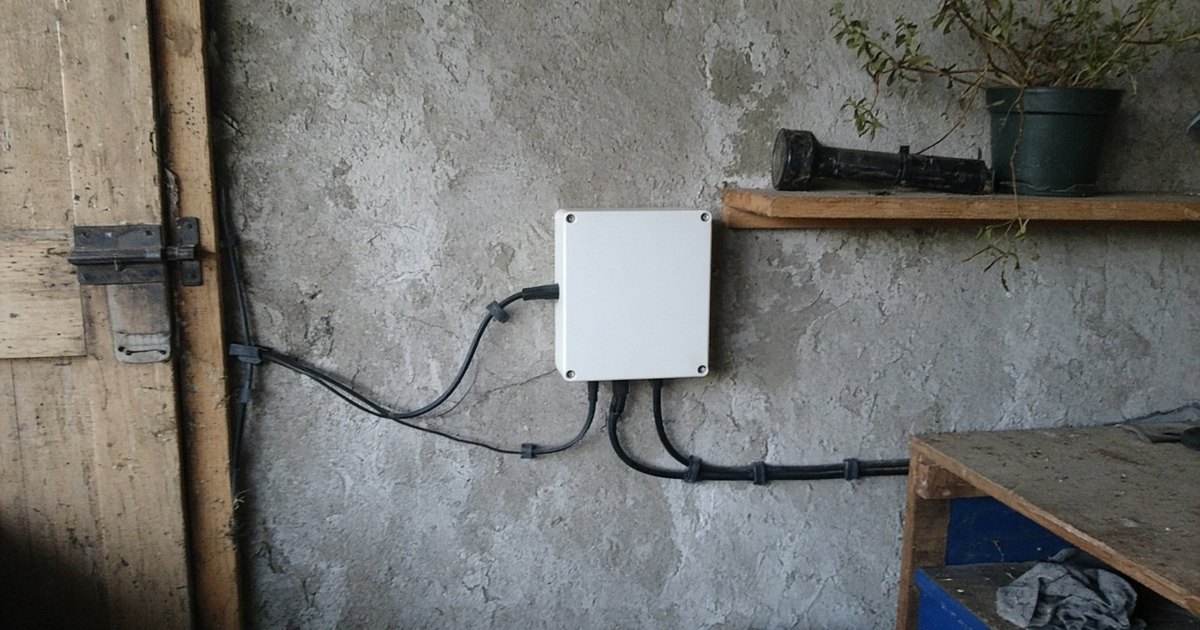
A single panel rating also keeps the electrical side coherent. A solar install needs an inverter, and our solar package includes a hybrid inverter, matched to the array when the system is designed. What inverter you need explains that equipment in plain language, including how it works alongside storage if you add a battery later. You do not have to assemble that side from a leaflet. We design it with the panels. The 455-watt figure is the panel half of the same design, and it is the rating we use on the Scottish homes we quote.
Shade And The Layout On The Roof
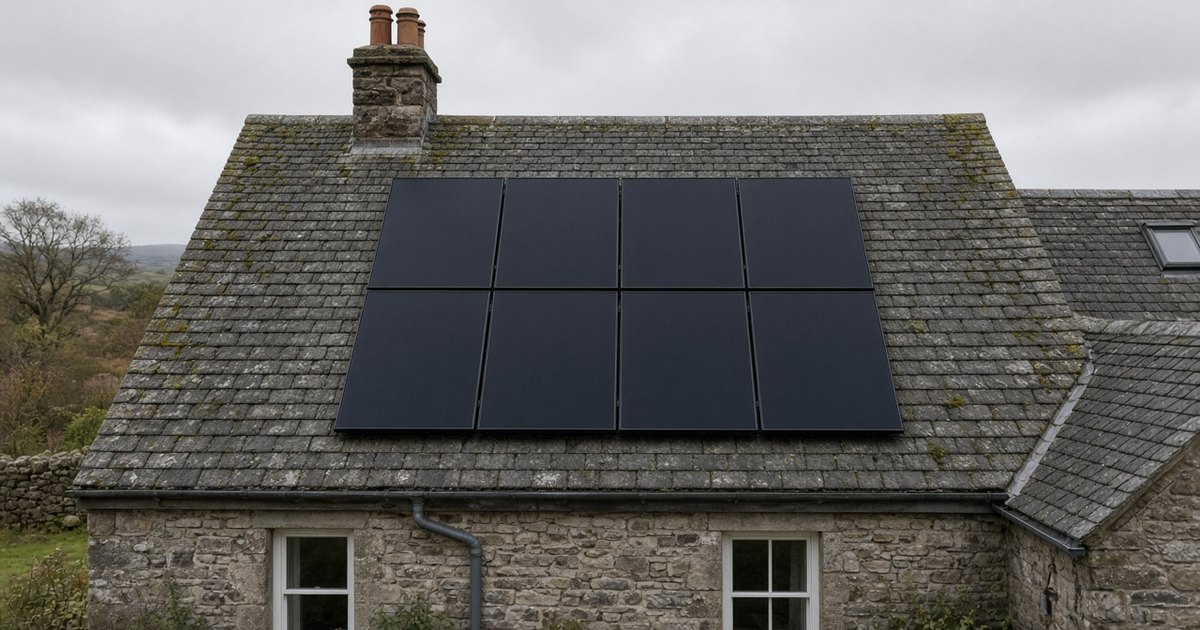
Shade is where a neat block of identical panels meets a real building. A tree across a farmhouse roof, a chimney on a semi, or a dormer that throws a shadow after lunch can cover part of a row and leave the rest in daylight. The layout has to respect that difference. We place panels on the clearer field, and we leave a gap where the shadow sits for too much of the day. A slightly uneven row is a normal outcome on a Scottish roof. It is often a better one than a full rectangle drawn across a shaded corner.
Any panel still needs daylight. Marketing language does not turn a tree-covered slope into an open south-facing one. What we can do is keep shade from sitting in the middle of an otherwise clear array, by choosing the rows with the roof in view. The survey is done in person. It shows where the shadows fall and how the slopes are broken up by chimneys, dormers, and nearby buildings. That evidence picks the layout. A photograph of an unshaded roof in hard sun, used to illustrate panels in general, does not know your tree or your ridge.
More Panels Versus Higher-Watt Panels
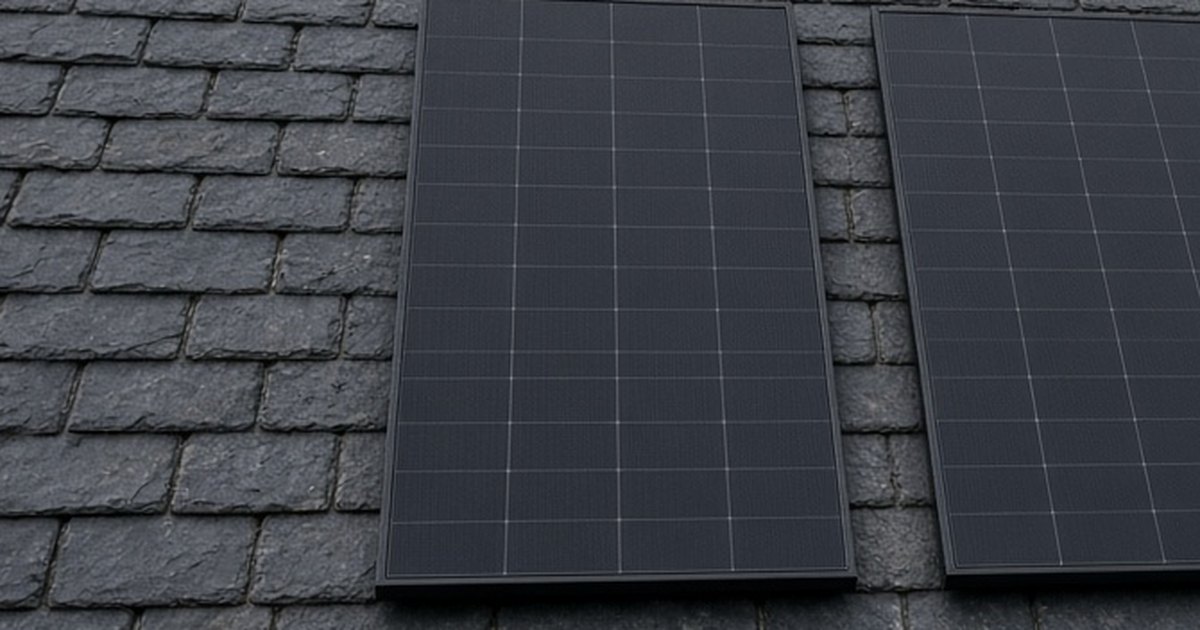
With the panel at 455 watts, a larger system means more panels, up to the 16 we quote, on a roof that can hold them. Chasing a higher wattage printed on a different leaflet is not how we size the array. What size solar panels are will help you see that these are already large rectangles, a bit taller than an internal door and about a metre wide. Adding another one is a step you can picture on the slope. Changing the whole set for a different badge, in the hope of a small gain on paper, moves the conversation away from the roof you actually have.
More panels help when you can use the extra power, when you plan to store it, or when the roof has unused clear space and your annual use supports the larger size. More panels on a shaded strip, or on a house that is empty all day with no plan for the surplus, mostly add export. We would rather stop at a count the household can live with. A higher-watt headline on a cover does not change that judgement. On our designs, the step that changes the system is a panel added or left off, inside 6 to 16, on a slope that can hold them.
What To Ignore In A Brochure
Set the badge on the frame to one side. You do not need a brand name to understand the system we are proposing, and we will keep the conversation on the roof rather than on a logo. Set aside stock photographs of perfectly symmetrical roofs with no chimney and no aerial. A Scottish roof is allowed to be weathered, slightly uneven, and interrupted. Set aside a wattage claim that is not tied to a count and a layout you could imagine on your own slopes. A number on a cover is the start of a question. It becomes a system only when someone has measured the building.
League tables that behave as if a prize had already chosen the panel for your house travel badly onto a shaded ridge. What travels is a survey, an MCS-certified install, and a design that uses 455-watt panels in a layout the covering can support. Factors to know before going solar gathers the wider checks, from usage to shading, if you want that longer list beside this one. For the panel decision itself, the brochure is background reading. The roof, seen up close, is the document that decides the rows, the gaps, and the count.
A Survey Picks The Layout
The survey is where the panel question becomes a layout. We measure the slopes, note the shade, mark the chimney and any dormers, and set the rows of 455-watt panels where they belong. The install that follows is MCS-certified. The design is agreed first, with the gaps included, so the crew is fitting a plan rather than inventing one from the scaffold. You should be able to see which slope is used and where a row stops.
Our solar services follow that order: understand the house, design the array, then install it. The survey is free and without obligation, for homes across Scotland. If you want the layout chosen on your roof, that visit is the step that does it. You should come away with a panel count, a kilowatt size, and a clear sense of where the rows sit, including the spaces left on purpose. That is the choice, made with the building in front of us and with your usage beside the drawing.
Common Questions
Which solar panels should I choose for a shaded roof?
Choose a layout that keeps the panels in the clearer parts of the roof. We design that layout with 455-watt panels and leave gaps where shade from trees, chimneys, or dormers would sit.
Should I choose solar panels by the brand name?
A badge on the frame is a weak way to choose. We design with 455-watt panels, and the survey sets the layout around shade and the space on your roof.
Is it better to fit more panels or higher-watt panels?
On our designs the panel stays at 455 watts, and the system grows by adding panels where the roof has room, up to 16. A brochure figure on its own does not set that layout.