Bigger Only Helps If You Can Use It
A bigger system helps when the extra power lands somewhere useful. That place is the house while the panels are generating, a battery afterwards, hot water through a diverter, or a car that is actually plugged in. If none of those can take it, the extra panels are making electricity you export. Export can still show up on a tariff, and it does a different job from avoiding a unit you would have bought when you needed it. We keep those two outcomes apart on every design.
The question often arrives because a neighbour filled their roof. They may be home all day, or they may have a battery and an electric car. Your own bill is the better guide. What size solar system you need starts from annual use and from how much of the day someone is in. Once that sensible size is clear, the remaining decision is whether extra panels earn a place on your particular roof, or whether they would mostly leave the house.
The Roof Sets A Hard Limit
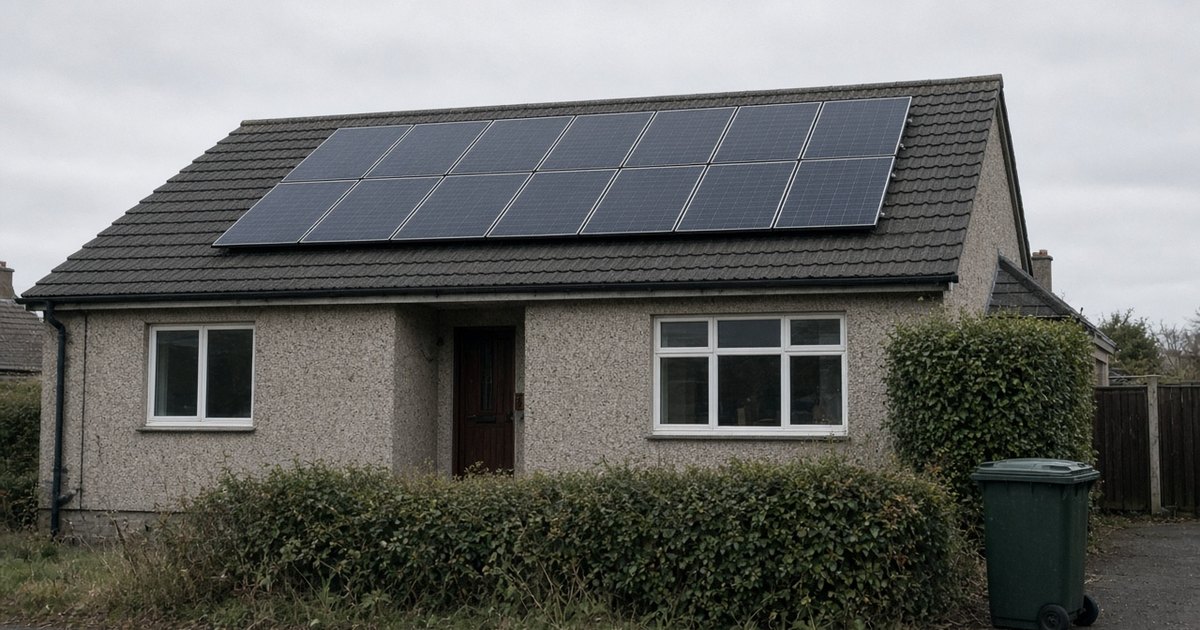
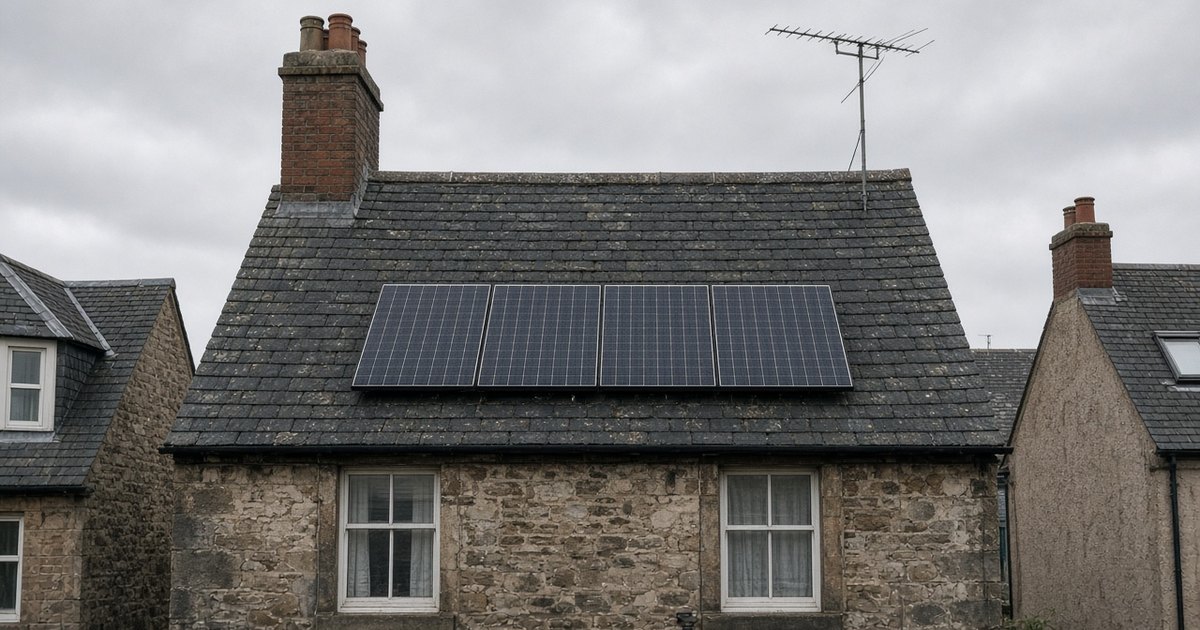
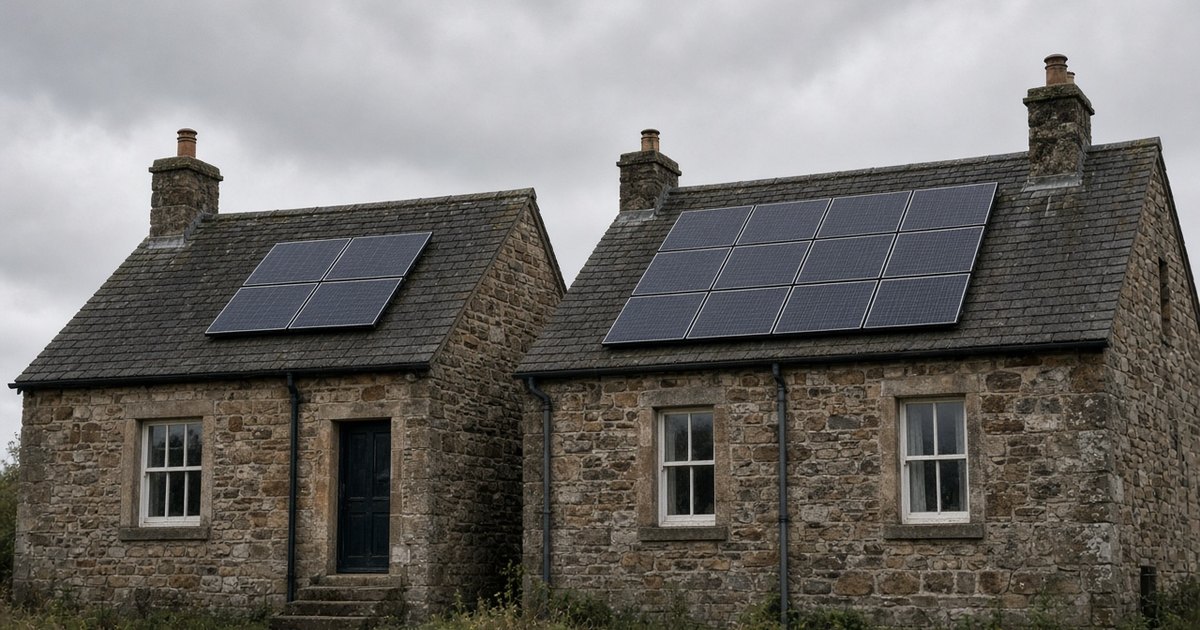
The slates set the limit before ambition does. Chimneys, dormers, roof windows, and shade from a tree or the house next door all use space that looks empty in a photo. A 455-watt panel is usually a bit taller than an internal door and about a metre wide, so a roof that looks generous can still take fewer panels than you expect. We measure the usable rows on the survey. A postcode cannot tell us where the chimney shadow falls at three in the afternoon.
How many solar panels you need is that measured count. Six panels is a modest array. Sixteen is the top of what we usually draw. In between, the roof may force an odd number because one row is shorter. We would rather leave a gap beside a chimney than sit a panel in shade so the drawing looks full. A panel that spends much of the day in shade adds little, and it crowds a layout that would have worked better with a gap.
Export Is Not The Same As Self-Use
Self-use is the power you consume in the house as it is made, or later from a battery. Export is what leaves because nothing in the house wanted it at that moment. A bigger system can raise both. Once your daytime habits are covered, further panels tend to raise export more quickly than they raise the power you actually use. Running the washing machine at noon helps. On its own it will not soak up a whole extra row of panels.
We will not invent a share for how much of that extra you would keep in the house. Tariffs move, and this article will not pin an export rate. The path from what you pay at the start to how the savings add up over the years is covered in our guide to the solar panel payback period. Use that piece for the longer arithmetic. Use this one to decide whether the extra panels have a job in your day.
Where Our Designs Usually Stop
In the quote tool our usual ceiling is 16 panels, about 7.3 kW. Ten panels is about 4.6 kW. Six is about 2.7 kW. Those are the small, middle, and large steps inside the range we design most often. Above sixteen panels, the roof, the incoming supply, and the inverter all have to be checked properly. We still install larger systems where the house and the electrics support them. The ceiling in the tool is the usual stopping point we draw, and the survey can still go past it when the building allows.
Care sits in a different conversation from how many panels fit. The Vixen Care Plan is priced for systems from 3 to 7 kWp. Larger systems can still be installed. If you want care on a system above that band, contact us and we will talk it through, so the plan is the one written for the size you have. The design itself does not stop at 7 kWp. The published care band does. We would rather say that while we are still looking at the roof.
A Battery Instead Of More Panels
Sometimes the better next step is storage, not another row. If you are out all day, the roof may already be making more than the empty house uses by late morning. More panels increase that surplus. A battery catches it for the evening, which is when many households in Scotland cook, wash, and put the lights on. For that pattern, stored power in the evening can matter more to you than a larger export in the middle of the day.
A Duracell 5 kWh battery suits a lighter evening and can be extended with another unit later. Sigenergy at 10 kWh includes a hybrid inverter. Tesla Powerwall 3 at 13.5 kWh is the all-in-one option, with the Tesla app, when you want a single unit. We match the battery to the evening you described. If the roof is already short of space, storage is often the lever you have left. If the roof is large and the evening is small, more panels are the part we would question first.
Ask For Two Sizes On The Same Roof
If you are unsure, ask us to look at two layouts from the same survey. One matches your daytime use. The other is a larger layout the roof could still carry. Seeing both makes the choice concrete. You can compare the extra panels with what they would do after the house, and a battery if you want one, have taken their share. A single drawing that fills the roof hides that comparison, and it makes a bigger system look like the only serious option.
You can ask for a quote to start, and we still walk the roof before anything is ordered. Bring an annual statement if you have one. Ofgem's typical medium UK home is often quoted around 2,700 kWh of electricity a year, with lower and higher homes either side at about 1,800 and about 4,100. Those are benchmarks, and they can be revised. Your statement overrides them. We will tell you if the bigger system is only bigger on the drawing.
Common Questions
Is a bigger solar system worth it if nobody is home during the day?
It is worth considering when a battery, a timed appliance, or a car on the drive can use the extra power. If nothing catches that power, much of the increase is exported.
Should I cover the whole roof with solar panels?
Only when the usable space, the shade, and your usage all support it. Filling in around chimneys and dormers so the roof looks full often adds panels that do little.
Can you install more than 16 solar panels?
Sixteen panels, about 7.3 kW, is the usual ceiling in our quote tool. Larger systems can still be installed where the roof and the electrics allow, after a survey.